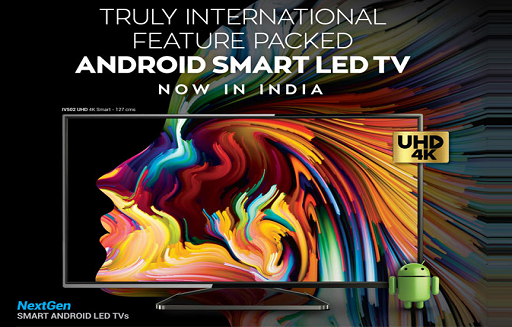
And concretely, What is a 4K (or Ultra-High Definition LED TV) Television?

When you plan to buy smart LED TV in Delhi, the question of definition arises with a word that comes up more and more often: Ultra HD (or UHD or 4K).

Should I acquire a model of this type and how will it change my life as a viewer? A legitimate question, especially in view of the technical arguments generally put forward and which are not very concrete. High Definition LED TV manufacturers will try the proof by example.

What is a 4K UHD TV? What does the Ultra HD image look like? Experts will try to put the words into it!

Large TVs keep an eye on you and you wonder if you should invest in Ultra HD at the same time, which is a little more expensive at the same size. The answer is yes and here’s why.

4K TV: A story of points

Understanding what Ultra HD 4K is ultimately very simple. A television image consists of dots that are displayed side by side, the famous pixels. A Full HD image, the previous standard, displays a definition of 1920 x 1080 pixels, or about two million points. Ultra HD displays 3840 x 2160 pixels or about 8 million points or four times more.

A priori, more is better, especially when it is four times more! That’s true and if that’s enough to convince you, you can stop playing and buy a 4K UHD TV! For those who like to understand and especially be convinced of the additional cost that a new technology inevitably entails, it is necessary to go a little further.

A story of size too

The definition is not an absolute value in itself; it only makes sense in combination with the size of the image. Again, nothing very complicated. It is obvious that it takes more dots on a TV that displays 1-meter diagonal to get the same density as on a smartphone of 15 centimetres diagonal.

The larger the screen, the bigger a dot will be at equal definition and the more it will be seen.

The question remains: at what size does the switch to Ultra HD make sense? Generally, this size is placed around 80 cm to 1-meter diagonal for a television. However, screen sizes have only increased since the advent of LCD and LED which makes it possible to create increasingly thin and almost edgeless models, not to mention a price per centimetre, in free fall too. Hence the temptation to switch to large sizes in the living room, 140 cm or more, which they certainly require Ultra HD.

We see everything in the 4K UHD image

To summarize, it is the details, precision and finesse of the image, essential for all those who love the big show: movies, series or sporting events.

A striking example is a close-up of a face. The skin and expression are very difficult to reproduce with precision but this is what makes the beauty of some shots, the face of the hero with the skin buried in a western for example, as in the excellent series Godless currently on Netflix. Broadcast in Ultra HD, you will see the skin texture, every scar and every stigma of a hard life in the American West.

Ultra HD TV: At the heart of the action

Ultra HD allows you to approach without being embarrassed. If in Full HD, a screen of 1 meter requires a recoil of about 2.5 meters, in Ultra HD you can go to 140 cm at the same distance. Obviously, the closer you are, the more the feeling of immersion will increase, as in the cinema. All the films and all the series a little spectacular by their camera movements, the action, the landscapes … take on another dimension when the edges of the image fade from the field of view. Now with a large screen and Ultra HD, immersion at home is close to that in the cinema.

Save Energy and Stay Cool with Top Air Conditioners in India

Top air conditioner brands in India provide a refreshing escape from the summer heat, but you may need to strike a delicate balance between your comfort preferences and your budget when deciding the temperature.

Simply put, the lower you set the temperature setting for your air conditioner in the summer, the higher your energy bills. However, some variables you can gain an advantage by paying attention.

Set the Right Temperature in Summer and Winter

On summer days when the frequency and rates of use increase, you can adjust the air conditioning temperature to 23–26 °C. While in winters, it can range between 20-24 °C. Window air conditioner price and star rating also affect the electricity consumption and bill rates.

Air conditioners manufactured for comfort will consume more energy if overheating or overcooling. Otherwise, due to sudden temperature changes, your risk of developing diseases such as air conditioning bump, asthma, bronchitis, headache, muscle retention, muscle pain, and pneumonia, which are common in summer, will increase.

Prevent Heat Leaks

With the temperature setting, you can help your air conditioner provide better cooling with less energy by preventing hot air from entering your home and cold air from escaping.

Follow these simple tips to keep your home cool throughout the summer:

  • On very hot days, you can save energy by cutting the heat of the sun with curtains, blinds and shutters.
  • Use insulation materials to prevent heat leakage, or replace worn insulation materials and glue them around doors and windows.
  • Install ceiling fans to improve cooling efficiency.
  • Make sure your air conditioner is regularly maintained

Choose Sleep Mode at Night

An air conditioner in sleep mode increases the set room temperature by 1 degree after half an hour and by 2 degrees after 1 hour. Those who sleep in the room where the air conditioner is located sleep comfortably thanks to this feature by increasing the room temperature and regulating the airflow.

An air conditioner with sleep mode turned on will turn off automatically after about 6 hours. In this way, you will not have to interrupt your sleep to turn off your air conditioner.

Watch Out for Moisture

High humidity can make a hot day much more difficult to endure because your body’s sweat glands can’t work efficiently when there’s a lot of moisture in the air. When the air dries, your sweat easily dissipates and you feel more comfortable.

However, you can reduce the humidity in the environment with the function that means “drying”, which you can also see on your controller as a “dry” mode in air conditioners. In de-humidity mode, the fan of your air conditioner operates at low speed, and water vapor in the air is drawn, reducing humidity. In this way, it is possible to reduce the temperature felt. In addition, the mode of moisture is to prevent the formation of mold, bacteria, and fungi.

Change, save money

If your air conditioners, which are more than ten years old, do not have inverter technology, they consume 40% more energy than air conditioners that provide the same cooling performance. You can reduce your bill, especially in summer by opting for A+, A++, and A+++ class air conditioners with the least energy consumption.

In addition, it is very important to choose the right capacity when buying a new air conditioner. Because a device larger than your need means unnecessary energy consumption, while a device that is taken with low capacity for savings will also cause dissatisfaction due to insufficient comfort.

Protect Both Your Health and Budget with Top Air Conditioners in India

Depressing summer temperatures adversely affect working and living conditions. In this period, products of top air conditioner brands in India become indispensable in our homes and offices. So how is it possible to make this comfort long-lasting and efficient?

What are the Benefits of Air Conditioning Maintenance?

In order to extend the part and service life of your air conditioners and to achieve optimum efficiency with energy-saving, experts of air conditioner brands in India recommend that the annual maintenance and controls of your air conditioners be carried out regularly.

How Often Should I Have My Air Conditioner Serviced?

Your air conditioner consists of two parts: the internal unit and the outdoor unit. Depending on the conditions of use, if you use air conditioning indoor unit maintenance and air conditioning outdoor unit maintenance at least 1 time per year, summer and winter intensively, you should have periodic maintenance done by authorized services before seasonal transitions 2 times a year. In case of failure and the need for air conditioning maintenance service services, authorized services must be hired.

In addition to general maintenance, you should clean the air conditioning indoor unit filter once a week during regular periods of use of air conditioning. This process is fairly easy maintenance that you can do alone.

What is Weekly Air Conditioning Care?

Weekly care is the general care that an amateur user must do once a week, which he or she can do in his home. What to do in weekly care can be listed as follows.

  • Filter cleaning
  • Control cleaning (wet cloth should not be used)
  • Cleaning of air intake grids
  • Eye control of the external unit

What is Annual Air Conditioning Care?

During seasonal transitions, authorized air conditioning service professionals must carry out extensive maintenance.

In this maintenance, both the air conditioning indoor unit and the air conditioning outdoor unit are completely overhauled and all elements affecting performance, health, and safety are checked.

Annual Air Conditioning Maintenance: Air conditioning maintenance is carried out once a year in order to reduce the occurrence of failures in the air conditioner and to keep the operating efficiency of the system high. All faults except user and operating failures are repaired.

What is done in annual air conditioning maintenance?

  • Evaporator and condensate, special heat exchanger detergent, and pressure air and/or water cleaning
  • Control and completion of high and low-pressure values of the gas in the system
  • Electrical installation, V-vending machine, voltage, and current values control
  • Control of all socket connections and cable ports
  • Drainage pan and cleaning of the line
  • Cleaning of the fins of all fan propellers
  • Cleaning of air filters with special chemical
  • Performance control and voice control
  • Aesthetic image control

What are the Benefits of Air Conditioning Maintenance?

Since the air circulation in non-maintained air conditioners will be less than the product being maintained, the internal unit will work longer to reach the set temperature. This will be reflected in the extra cost to the user’s electricity bill.

Periodic maintenance of air conditioners is essential for both healthy use and energy saving:

  • Unexpected failures are avoided; your device’s performance improves.
  • Fault costs are reduced, and the life of your device is extended.
  • Energy costs are reduced.
  • Clean indoor air is provided.

The possibility of uninterrupted use of your system increases; your air conditioning system provides “continuous comfort” as the probability of failure is minimized thanks to the periodic maintenance of your air conditioners.


Air Conditioners in India: Tips to use them efficiently

As the temperatures rise, we will all start using our air conditioners for cooling purposes during these days when we stay at home. However, if even the most efficient AC from top air conditioner brands in India, is used unconsciously, it negatively affects the ecological balance, and its improper use can impair your health and cause unnecessary energy consumption.

Here are a few tips given by professionals of the best window air conditioner brand in India that you must keep in mind for efficient usage of AC device:

Serpentine and Filter Cleaning

The serpentines, fans, interiors, and filters of air conditioning devices keep dust and get dirty over time. This affects the efficiency of the air conditioner and wears out the machinery over time.

While dust can be held with air conditioning filters, volatile organic compounds can be eliminated by ventilation of the environment, and biological pollutants can be disposed of by hygienic maintenance of the AC.

Therefore, if the air conditioning device is used in summer and winter, at least in every transition season, serpentines should be cleaned and periodically maintained by authorized services at least once before each use period.

During periodic maintenance, control of the refrigerant inside the device should also be carried out.

Setting the Right Temperature in Your Air Conditioner

Air conditioners are devices made for comfort; Overheating or overcooling will cause these devices to consume more energy, even if you have the most efficient and economical model.

It is enough to adjust the desired room temperature from the control of air conditioning devices between 23° C-26° C in normal rest and work areas in hot weather. The recommended setting value for volumes heated in winter conditions is 20° C-24° C.

Adjusting the Air Blowing Direction Correctly

By adjusting the direction of the vertical and horizontal wings in the air conditioning device or by continuously moving the blown air, a homogeneous cooling can be obtained, the desired room temperature can be created more quickly and energy can be used efficiently.

In case the air guiding wings do not work in the moving mode, the wings should be up to cool the room, downwards to heat the room.

Using in Humidity Mode

On days when the air is not too hot and the humidity is high, the air conditioner should be operated in humidity mode. Removing moisture will create a comfortable environment.

Avoiding Airflow for Health and Comfort

It is inconvenient for health to stand in front of the air conditioner and in the airflow for a long time, to sit, to stay in the cold airflow.

More care should be taken during the use of air conditioning in the rooms of the elderly, sick, and children, and care should be taken not to affect their health conditions. Due to the sensitivity of the human body, there should be a temperature difference between the selected internal air temperature and the external air temperature not exceeding 7-8° C.

Air Conditioners in India: Benefits of having them at Home

If you are still hot in your home, it is because you do not know the advantages of having an air conditioner in India installed at home.

Without a doubt, air conditioning systems have a great beneficial impact on our daily lives, even if we are not aware of it. These can be both comfort and health. It is one of the best investments that users can make in their homes.

What are the benefits of home air conditioning?

If in winter you do not have a fireplace that surrounds the house, it depends on the geographical area in which you live, it can be very difficult to withstand the temperatures no matter how much you warm up.

As in summer, which is especially more difficult to withstand the heat and we cannot depend only on a fan, because hot flashes are the cause of many fainting, among others. Therefore, experts of the best window air conditioner brand in India can mainly highlight the following benefits of installing air conditioning at home:

  1. Comfort and quality of life

Having an air conditioner at home improves the comfort and quality of life of users. Why?

Especially because it allows us to maintain a stable temperature in the room with a filtered and clean environment. In addition, an air conditioner removes that annoying humidity that is generated in the house allowing users to rest and sleep on the hottest summer days without having to endure that embarrassing heat. Or not?

  1. Filtered and clean air thanks to air conditioning at home

The air conditioning machines filter the air of the house or the room throughout its period of operation. These equipment are manufactured with different filtration technologies, from types of carbon filters or own filters developed by each manufacturer, or even with Ion generators to maintain a healthy, clean air free of bacteria, viruses, and allergens. Experts summarize it that:

  • Eliminates viruses and bacteria
  • You get clean, renewed, and fresh air
  • Helps prevent respiratory diseases

Thanks to air filtration, users can breathe better and avoid respiratory diseases due to inhaling an environment loaded with harmful components.

  1. Constant ventilation and dehumidification

Very important! Air conditioners have the ability to constantly ventilate and dehumidify the house. The air conditioning at home makes the environment of each room drier, and therefore, prevents mold or humidity from being generated, which can seriously harm health.

  1. Stable and controlled temperature with air conditioning at home

An air conditioner at home allows you to have a stable and controlled temperature. The good thing about today’s equipment is that you can visualize at all times and in different ways, what temperature the room is thanks to the sensors that continuously detect the temperature of the processed air.

From display screens, controls, or even your smartphone, it is possible to manage and control the desired temperature, regulate it and obtain savings in efficiency, consumption, and better performance wherever you are.

  1. Better performance of electronic devices

Thanks to the points mentioned above such as stable and controlled temperature or air recirculation, air conditioners allow the electronic devices in the room to work better and help avoid future breakdowns related to overheating or lack of air recirculation. So an air conditioner at home:

  • Prevents breakdowns in electronic components
  • Extends its useful life.
  • It also improves its performance.

As the air is always circulating in the house or room, it allows the equipment that may be inside not to heat up or generate preheated environments.


Why should one only buy from the best air conditioner brand in India?

As global warming becomes a significant issue, the necessity for AC becomes more than a luxury. Most individuals would be tempted to either buy a new air conditioning system or have their present one serviced as summer approaches. But, there’s one thing you should always remember: only get the best air conditioner brand in India. Why? Here’s all you need to know about the product before you buy it.

Why is the branding choice the best? 

Several brands produce air conditioners, some of which are old and well-known, and others that are new and less well-known. Although personal preference plays a role in this decision, there are situations when you must explore different brands without prejudice. Most people, for example, would choose a specific brand (Samsung, for example) because they have had positive experiences with other household appliances (like televisions).

As a result, based on these criteria, one must and should only choose the best air conditioner brand in India.

  • The air conditioners original cost was
  • The price of replacement parts
  • The expense of upkeep
  • Service centers within a reasonable distance of your home

Things to consider before making a purchase

Let’s take a look at some of the other details you should be aware of to make an informed decision.

Location of installation

The first thing you should think about is where you want to put the air conditioner. This will decide the size as well as the type of air conditioner you require. A room with a small window is ideal for window-type air conditioning. However, considering the expense of installation, a split air conditioner is more viable if you have a room without a window. On the other hand, you must consider the space outside the room where the external unit will be placed. It’s also a good idea to think about how the air will circulate inside the room. One method is to allow the air to flow into the room from the entrance inwards. This guarantees that the environment remains cool.

Design

Because an air conditioner is a home item that is meant to blend in with your decor, its design should be carefully considered. The majority of air conditioners come in white, making them acceptable for placement in most rooms. Dark-colored spaces may benefit from a patterned air conditioner. A white one should suffice for light-colored themed spaces. You might also want to think about other features that come with the air conditioner to see whether they fit your needs. The majority of air conditioners on the market come with remote control. Some people make use of home automation. These air conditioners have Wi-Fi capabilities. They can now host certain more features as a result of this.

Noise tolerance 

When determining where to put your air conditioner at home, the noise level isn’t necessarily a deciding factor. However, if you want to put the device in your bedroom or study, you should think twice. Split air conditioners create substantially less noise than window air conditioners. The compressor and fan are housed in the outside unit. Noise levels can be lowered if the external unit is located at a distance from the room’s outer wall. However, this may raise the cost of ducting and wiring installation. The window air conditioner is ideal for most small and medium-sized rooms.

Conclusion

We hope that, armed with the information presented above, you can appreciate the importance of purchasing the best air conditioner brand in India. If you’re ready to make a change in your home’s comfort level, choose Intec’s high-quality air conditioners today.

The main key features you should know before you buy android TV in India

Thinking about whether or not you should buy Android TV in India? We’ve got you covered. In this blog, we’ll go through the essential features of Android TV to help you solve this problem and decide whether buying one would be a worthwhile investment for you.

Key Features of Android TV

  • Search: To find what you’re looking for, use the search bar at the top of the Android TV screen or the voice search button on your remote. Android TV searches a variety of providers, including Netflix, Hulu, YouTube, and Google Play Movies and TV, for what you’re looking for, and prioritizes the cheapest option.


  • Games store:Between seasons of Breaking Bad, how about a game of Pong? When you buy Android TV in India, you also receive access to a dedicated gaming shop. Its game shop now contains more games than any other TV operating system. Some games are free and some are paid, similar to Android phones.


  • Cast support:Google Cast compatibility is built-in for all Android TV players and televisions. When you see the Google Cast icon on your device, you can stream entertainment from it to your TV.


  • Personalized content:Android TV analyzes the kinds of TV shows and movies that you usually watch, play, and listen to, and serves up similar things you’re likely to be interested in.


  • Voice search:Instead of going all the way to the top of the UI and typing out the name of the show, movie, or star you’re looking for, simply voice the name into the Android TV remote.


  • Virtual Assistant: smart assistant found its way into Android TV near the end of 2017. The Google Assistant for Android TV is identical to the one seen in Google Home and some higher-end Android phones. To get started, simply say “OK Google.” Google Assistant works similarly to Siri or Cortana in that it can schedule appointments, check your to-do list, and answer questions about popular topics. Its distinctive feature is that it can also operate smart home devices such as thermometers, light bulbs, and smart locks.

Go with Intec

At INTEC, we make sure that each customer can buy android TV in India that suits their needs while also ensuring its longevity and good picture quality. So, if you’re seeking a capable television maker, go no further than INTEC.

How split air conditioner price and monthly expenses might affect you?

Split air conditioners are the most common type of cooling system, and they can be found in nearly every home. It is extensively used since it is less expensive and simpler to install. However, if you are considering purchasing one, you should be aware of the split air conditioner price as well as its other costs, particularly those that will become a part of your life and will occur every month. Interested? Let’s go through some of the hidden prices and expenses that you might not be aware of when purchasing an air conditioner.

The Standard Unit

When compared to window air conditioners, split air conditioners produce less noise because the noise-generating machinery is positioned outside the room. These devices come in a variety of cooling capacities, but unlike window air conditioners, their size isn’t directly proportional to them. This is because the main cooling mechanism is located in the outdoor unit, whilst the indoor unit is smaller. Split air conditioners prices in India currently have cooling capacities ranging from 0.75 to 4.5 tonnes. In this article, we’ll assume that your air conditioner fits the aforementioned description. Is that clear? Now for the meat of the matter.

The cost of installation

After the expense of the split air conditioner, you will have to pay for installation. Some vendors, both online and offline, also provide free installation. If not, the whole installation cost, in most circumstances, will be less than Rs. 2000. However, this does not include the cost of additional copper wire, which will vary based on a variety of circumstances.

The price of copper wire

Most manufacturers provide a certain length of complimentary copper wire, but if your AC setup necessitates more, you’ll have to pay for it. This necessity will be communicated to you by the installation crew. Copper wire costs Rs. 200 per foot in most places, including fitting charges.

Service Cost

  • The cost of service varies depending on whether your computer is still under warranty. After purchasing an air conditioner, the compressor is the most expensive component to service. Most manufacturers’ compressors come with a 5-year warranty. If your compressor breaks down after the guarantee period has expired, it can cost you anything between Rs. 8000 and Rs. 8000.
  • The cooling gas is the second most expensive part of maintaining an air conditioner. The gas is circulated in copper tubes, which are prone to corrosion, as previously stated. If you live in a place like Mumbai, where the humidity is high, the copper tubes are likely to rust and shatter. As a result, there will be less cooling, and eventually none at all. The tubes can be repaired by a local AC mechanic for a fee ranging from Rs. 500 to Rs. 700. After that, you’ll need to refill the compressor’s gas tank. A 1-ton air conditioner would set you back roughly Rs. 2500. The majority of brands’ warranties do not cover this.

Monthly Electricity Cost

  • When purchasing an air conditioner, most customers overlook the cost of electricity. This is where star ratings are important, and you must make your decision properly. As previously said, the lower the star rating, the lower the electricity bill. Inverter air conditioners are the most energy-efficient. The estimated electricity costs for houses and offices are listed below.

Household Costs (Runs 3-4 Hours/Day)

Your monthly electricity bill will be around Rs. 620 if you buy a 1-ton air conditioner and use it for about 4 hours every day. This is a rough estimate based on the per-unit cost of power in your area of Rs. 4. If the same considerations are taken into account, the monthly electricity bill for a 1.5-ton AC would be around Rs. 920. If you choose a machine with a better star rating, the cost will be reduced, and vice versa.

Office costs (7-8 hours each day)

The cost of power per unit in commercial areas differs from that in residential spaces. The monthly cost for a 1-ton machine would be Rs. 1,382, assuming the AC works for roughly 8 hours every day. Using the same figures as before, a 1.5-ton system will set you back Rs. 2,073 a month. The monthly cost of a 2-ton air conditioner is roughly Rs. 2,880. This time it’s for an air conditioner with no mention to a star rating. The prices will be cheaper if you purchase a higher-rated air conditioner.

Conclusion

The sun is ready to soar as summer approaches, and there’s no better time than now to go pick out the perfect cooling gadget for your house or office. You can compare the costs of our INTEC split air conditioners price to those of other brands to choose the one that best suits your needs.

High-definition led TV guide – how to find the best TV for your home?

Purchasing a smart high-definition led TV isn’t as simple as purchasing a phone; there are hundreds of models to select from, each with its own set of features. You’ll want to choose wisely. The following is a comprehensive Smart TV buying guide with important considerations to make while selecting the finest affordable smart television for your home.

The Main Factors to Consider

  • Dimensions of the Screen: When buying a smart TV, the screen size is the most significant thing to consider. It is very dependent on where you want to put it, the size of the space, and the number of people who will be watching at any given time. Choose a 32-inch TV if the viewing distance is less than 5 feet. Choose 43-inches if the distance is between 5-6 feet. A 46- or 50-inch TV would also be excellent for viewing distances of 6-7 feet. You can use 50- and 55-inch panels for lengths greater than 8 feet.


  • Resolution of the screen: The screen resolution, or how sharp and crisp it is, is defined by the number of pixels on the screen. A greater resolution translates to more pixels and a clearer image. Full-HD panels feature four times the number of pixels as Ultra-HD (4K) panels. As a result, the objects on the screen will appear more detailed and richer. Thanks to technological developments, we now have 8K televisions, but you’ll need actual 8K content to get the most out of it.


  • Rate of Refreshment: The refresh rate is critical for any high-definition LED TV.It’s the number of times a display’s content is refreshed every second. In Hertz, it is defined as (Hz). 60Hz is the common refresh rate for television displays. If you’re buying a high-end television set, though, you should look for a higher number. Smoother motion is achieved with a higher refresh rate, such as 90Hz, 120Hz, 144Hz, or more. You won’t see any blurriness in swiftly moving objects, as is the case with ordinary panels. It’s not a must-have function, but it’s necessary if you want to play games or use your TV as a computer display.


  • Sound: When purchasing a smart TV, audio is one of the features that are sometimes overlooked. Checking the audio wattage is a good rule of thumb (mentioned in Watts). The greater the number, the louder the television. This, however, does not indicate whether the audio would distort at greater volumes; you’ll have to look into it in the reviews or ask someone in the store.


  • Features of Connectivity: You should also look at the number of ports on the television. Look for at least four HDMI ports so you don’t have to swap out cords every time you want to connect a device. Although most 4K TVs enable HDCP (High-bandwidth Digital Content Protection), only the latest models support HDCP 2.2. Check for it in the spec sheet to avoid any problems when streaming from a 4K source device (such as a Blu-ray player) or a service that supports HDCP 2.2.


  • Pricing: Last but not least, you should determine whether the Smart TV’s pricing reflects its features and performance. Checking the competition, i.e. other TVs in the segment, is the simplest way to do so.

Conclusion

We hope that this post has aided you in your search for the greatest high-definition LED TV for your home. Always consider all of the characteristics and features compare them to the competitors, and look for any special deals before making a purchase. If you’re looking for a high-quality LED TV for your home, have a look at what we have to offer at INTEC.

Willing to buy a TV? Choose from the range offered by the best LED TV brands in India

TVs with a diagonal of 32-43 inches are considered optimal in terms of price diagonal. According to the LED TV manufacturing companies in India, 32 or 43 inches is the golden mean between cost and diagonal, so if you choose a TV for the bedroom, kitchen, or living room, then take a closer look at this diagonal.

If the kitchen is small, then a little smaller is better so that it is convenient to place and watch your new TV. A TV with too large a diagonal for a small room will not be very convenient. For an ordinary apartment, a high-definition LED TV with diagonals of 32-43 inches will be best.

Optimal parameters when choosing a TV

In short, the ideal TV settings for 90% of the population will be as follows:

  • TV size: 32-43 inches. Depends on the room.
  • Display resolution: Full HD 1920×1080.
  • LED matrix type
  • Panel sweep frequency: 50, but 100 Hz is better.
  • Without Smart TV and additional functions.

So you save money and buy the best TV option. You can expand the functionality with a smart set-top box. If you watch movies and find them in 4K quality, you can pay extra and buy with a 4K display resolution but this will lead to a difference in price.

The main thing to pay attention to is:

  • Display size and resolution
  • Sweep frequency
  • Matrix type

This is something that cannot be changed later.

TV prices and where to buy

Choosing a TV is a rather important step because the price is quite high and it is better to buy from the top LEDTV brand in India, like Intec.

Which TV to choose: LED or LCD

Televisions of this type are currently considered the most common. Both LCD and LED screens are based on liquid crystals. Only the former are illuminated with fluorescent lamps.

Now it is better to buy LED TVs. And this is because they consume almost 40% less electrical energy than LCD TVs. Their images are many times brighter and bring more contrast than those of LCD matrices. In addition, LED TVs are much thinner than their LCD predecessors and are safer because the LEDs do not contain mercury.

The only downside to LED TVs is the price: they are usually more expensive than LCDs. But do not hesitate: with the above advantages, they will pay off very quickly. Choosing an LED TV is one of the best choices you can make.

By the way, if you decide to buy an LED TV, please note that there are two types of backlight: side and back. The first is cheaper, so you can give preference to it.

Should You Buy an OLED TV?

These are devices whose displays are based on a matrix built on organic light-emitting diodes. It is believed that now it is the most modern matrix.

Their advantage lies in the absence of the need for additional lighting. When the power is turned on, OLEDs begin to emit light on their own.

Unlike LED panels, OLED panels are famous for deeper and more natural blacks, wide viewing angles, high contrast, and brightness.

They provide more natural color reproduction. This is the newest and most expensive version of the matrices. But if you don’t plan on spending too much time in front of the TV, then you shouldn’t splurge on OLED. Natural black color is also available in VA matrices, and LED will be enough for most.